
Stains · Drips · Sagging drywall
Ceiling water damage repair in central and northeast Maryland
A wet ceiling means water is sitting above it, and the stain you can see is usually smaller than the wet area you can't. We connect you with local crews who trace the source, open and dry the ceiling cavity, and get it ready for repair.
Page reviewed
Whether it's your pipe or the unit upstairs, start with a call.
Water Coming Through the Ceiling? Call NowWhile it's still dripping
What to do right now
Find the water above
Check the bathroom, kitchen, laundry or water heater on the floor above. If it's a supply leak, close the fixture valve or the main.
Keep out from under it
A ceiling that bulges, sags or hangs lower in the middle is holding water. Keep people and pets out from under it, and don't try to puncture it yourself.
Mind the lights
Water often exits through light fixtures and fans. If water is near outlets or panels, do not enter and call your utility and emergency services.
Catch the drips
Put a bin or bucket under the drip and move furniture, rugs and electronics out of the way.
Go upstairs, or call
In a condo or apartment, knock on the door above. If nobody answers, call the management office, which usually has access.
Photograph it
Take pictures of the stain, the drip and the room before anything is moved or opened.
Not sure where it's coming from? We'll help you narrow it down.
Call and We'll Walk You Through ItWhat a wet ceiling actually means
Most ceilings in this corridor are drywall screwed to joists, or plaster on lath in older rowhouses and pre-war homes. Above them is a cavity: joists, sometimes insulation, pipes, ductwork and wiring. When water reaches that cavity from above, it spreads along the top of the ceiling until it finds a seam, a fixture box or a low point, and that's where it comes through.
That means the stain marks where water escaped, not where it started or how far it went. A pipe leak two joist bays away can surface over the middle of the room. Insulation above the ceiling holds water against the drywall, which is why wet ceilings sag and why closing them up without drying the cavity doesn't work.
The stain shows where water got out. The wet area above it is almost always bigger.
What people usually notice
- A yellow or brown ring that grows, or darkens after rain or after a shower upstairs
- Bubbling or peeling paint on the ceiling
- A soft spot, or drywall tape seams showing through
- Drips from a light fixture, fan or smoke detector
- A sag or bulge, often in the center of a room
- A musty smell in a room with no visible water
When a stain appears matters. One that grows after heavy rain points to the roof, flashing or gutters. One that shows up after someone showers or runs the washer upstairs points to plumbing. One that appears on humid summer days with the air conditioning running often comes from the air handler.
Where ceiling water comes from in this corridor
Bathrooms and kitchens above
Shower valves, tub drains, toilet seals and sink supply lines are the usual sources on a middle floor. They're often slow leaks that stain before they drip.
The unit upstairs
In condos, garden apartments and stacked townhouses, the water often isn't yours. It comes from a neighbor's bathroom, water heater closet or washer, or from a shared riser in the wall between.
Air conditioning condensate
Many homes here have an air handler in the attic or an upstairs closet. On humid summer days it produces a lot of condensate. If the drain line clogs and the pan overflows, water comes through the ceiling below.
Roofs and flashing
Worn shingles, failed flashing at chimneys and vents, and clogged gutters backing water under the roof edge all show up on top-floor ceilings. In winter, ice building up at the eaves can force meltwater back under shingles.
Pipes in cold spots
Supply lines running through an attic, an unheated garage ceiling or an exterior wall can freeze and split. The ceiling below is where it appears when they thaw. See frozen pipe bursts.
The first hour
The first job is stopping the source, and the second is working out how much of the ceiling and the rooms around it got wet. Note every stain, drip and soft spot, including in closets and hallways. If the leak was a supply line, a plumber repairs it; the restoration crew handles the ceiling, the cavity and everything the water reached.
If the water is coming from another unit
You're the downstairs neighbor, and you can't stop it yourself. Knock on the unit above, and call the management office or association whether or not someone answers. The office can usually reach the owner, shut off a riser or open the unit. A crew can begin drying your ceiling and belongings while the source is found.
If you manage the building
A ceiling leak can involve two or three units and a shared line. Getting access to every affected unit quickly shortens the drying job for all of them. Let each owner or tenant know what's happening, and point them to their own insurer for their own questions.
We'll coordinate access across units so drying can start in all of them.
Managing a Building? Call UsHow ceiling water damage is repaired
Confirm the source is stopped
The crew checks that the leak above is off or isolated before opening anything.
Map the wet area
Moisture meters and a thermal camera show how far water spread across the ceiling and into walls below it.
Relieve and remove
Sagging or saturated drywall and wet insulation come down in a controlled way, with the floor protected.
Dry the cavity
With the ceiling open, air movers and dehumidifiers dry the joists and the subfloor above. Smaller areas may be dried through access holes.
Check the walls and floor below
Water that came through the ceiling often ran down walls and onto flooring. Those are measured and dried too.
Verify dry
Framing and remaining drywall are checked against unaffected areas until readings match.
Prepare for repair
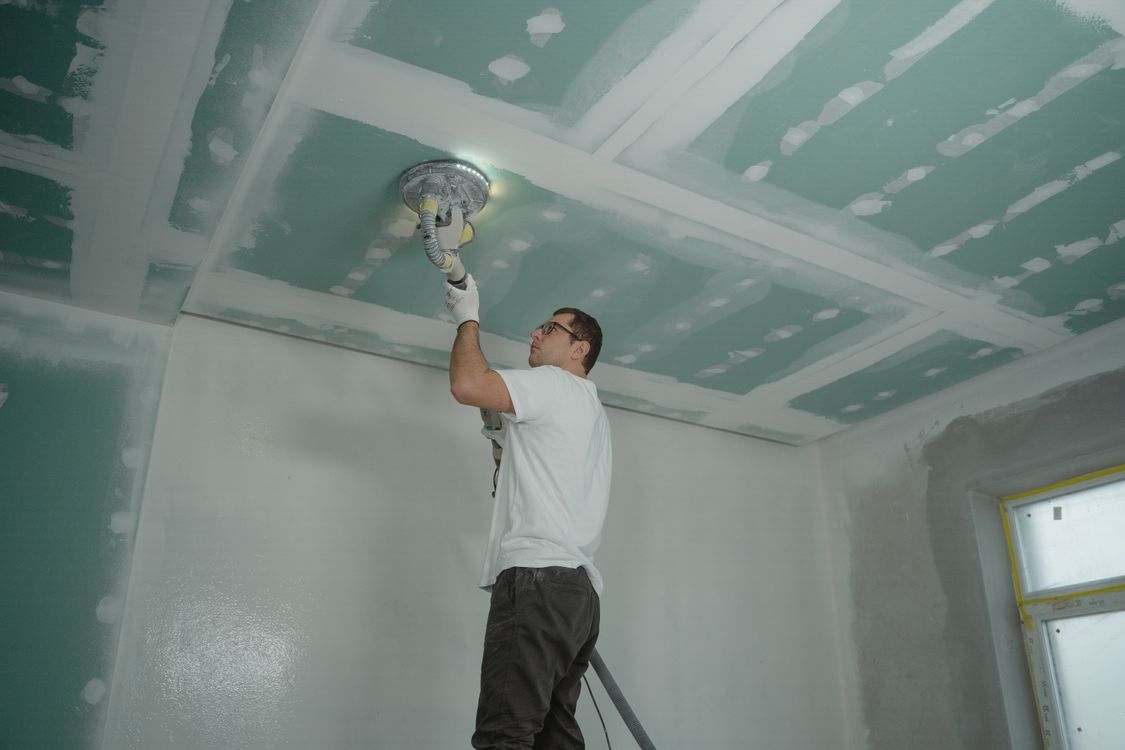
The opening is cleaned up and documented for new drywall, tape, texture and paint.
What affects time and cost
- How long water sat above the ceiling before it showed
- Drywall or older plaster and lath, which dries and repairs differently
- Insulation in the cavity, which usually has to come out once soaked
- Textured or popcorn ceilings, which complicate patching
- How many rooms or units the water reached
- Access: getting into the unit above, or opening a finished ceiling under a tiled bathroom
Water removal, opening and drying are priced before work starts. Ceiling repair, texture matching and painting follow once everything is dry.
Get a price for the drying before any drywall comes down.
Call for Upfront PricingAfterward
A repaired ceiling should only go back up over framing that reads dry. Closing up a wet cavity traps moisture, and the stain tends to come back through new paint. Once readings are normal, the opening is patched, taped, textured to match where possible and painted with a stain-blocking primer.
It's worth fixing the cause, too. Have the plumber check other fittings on the same line, clear the air handler's condensate drain each spring, and keep gutters clear before winter. In a shared building, the management office may want the source documented for its own records.
Keep your photos and the crew's records together. If you're contacting your insurer, what applies depends on your policy, so ask them. In a condo, the association should be told promptly.
Related services and areas
Related services
- Condo & Shared-Building Water Damage
- Drywall Water Damage Repair
- Burst Pipe Water Damage
- Toilet Overflow Cleanup
- Moisture Detection & Inspection
- Reconstruction & Repairs
Regions
Questions
Ceiling water damage questions
We'd suggest you don't. A ceiling holding water can come down all at once, and drywall and insulation are heavy when wet. Keep people out from under it, put a bin beneath, and let the crew open it in a controlled way with the floor protected.
Only once the leak is fixed and the ceiling and cavity are confirmed dry. Painting over a damp spot usually brings the stain back, and it hides any moisture still in the insulation or joists. A stain-blocking primer goes on first.
Rarely. Usually only the section that was saturated or sagging comes out, plus any wet insulation above it. The rest is dried in place. Readings decide where the edges of the opening go.
By timing and location first, then instruments. A stain that follows rain points to the roof; one that follows a shower points to plumbing. A thermal camera shows the wet pattern, and moisture readings trace it back toward the source above.
Knock on the door upstairs, and call your management office or association either way. They can reach the owner and shut off water to that unit or riser. Photograph everything. Questions about who handles the repair are for the association and your insurer.
That pattern often points to the air conditioning. Air handlers in attics and upstairs closets make a lot of condensate in humid weather, and a clogged drain line or cracked pan lets it overflow onto the ceiling below.
Yes. Plaster on wood lath, common in pre-war homes and rowhouses, is heavier than drywall and dries more slowly. It can lose its grip on the lath when soaked. Crews try to dry sound plaster in place and remove only what has come loose.
Often two to five days once equipment is running, depending on how much water there was, whether the cavity is insulated and whether it's opened. A closed, insulated ceiling dries much more slowly than an opened one.
That's a practical question for you and the crew. Drying equipment is noisy and runs around the clock, and an opened ceiling leaves a section exposed. Many people keep using the room with the equipment in place; others prefer to shut the door on it.
A stain overhead is worth a call today.
We'll connect you with a local crew to find the water above it and dry the ceiling before it's repaired.
A real person answers, around the clock.
Call Now: (833) 869-1696